





















How BYD is Shaping Global Technological Trends in the Automotive Industry
18/08/2026


18/08/2026
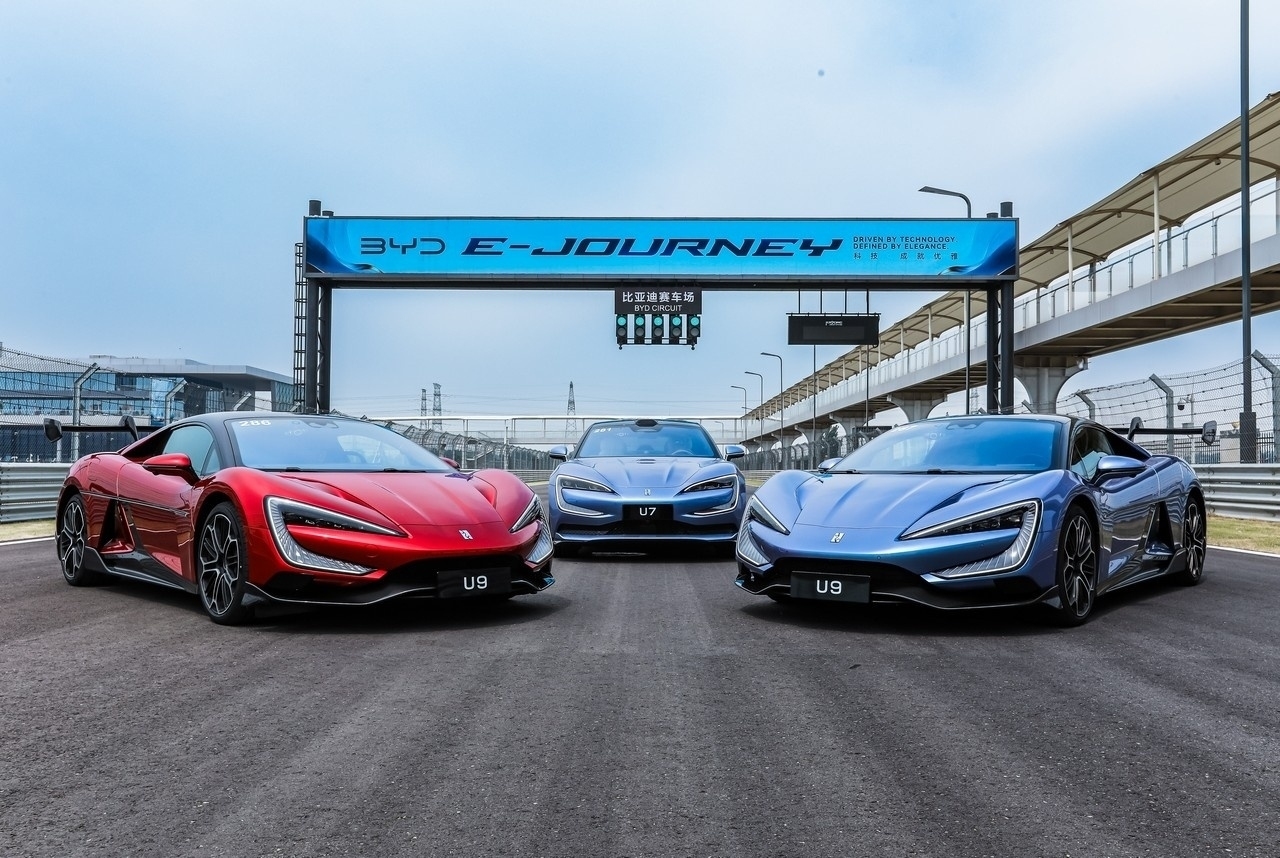
While global automotive giants debate the future of the internal combustion engine, in the Chinese city of Zhengzhou robots assemble cars at a rate of one per minute, and batteries charge to 97% in nine minutes. Media manager and entrepreneur Rustam Maksutov shares insights from a journey to BYD’s plants and proving grounds, where he traveled at the invitation of BYD’s distributor (part of Astana Motors) and tested 2026 premieres — from family hybrids to hypercars.
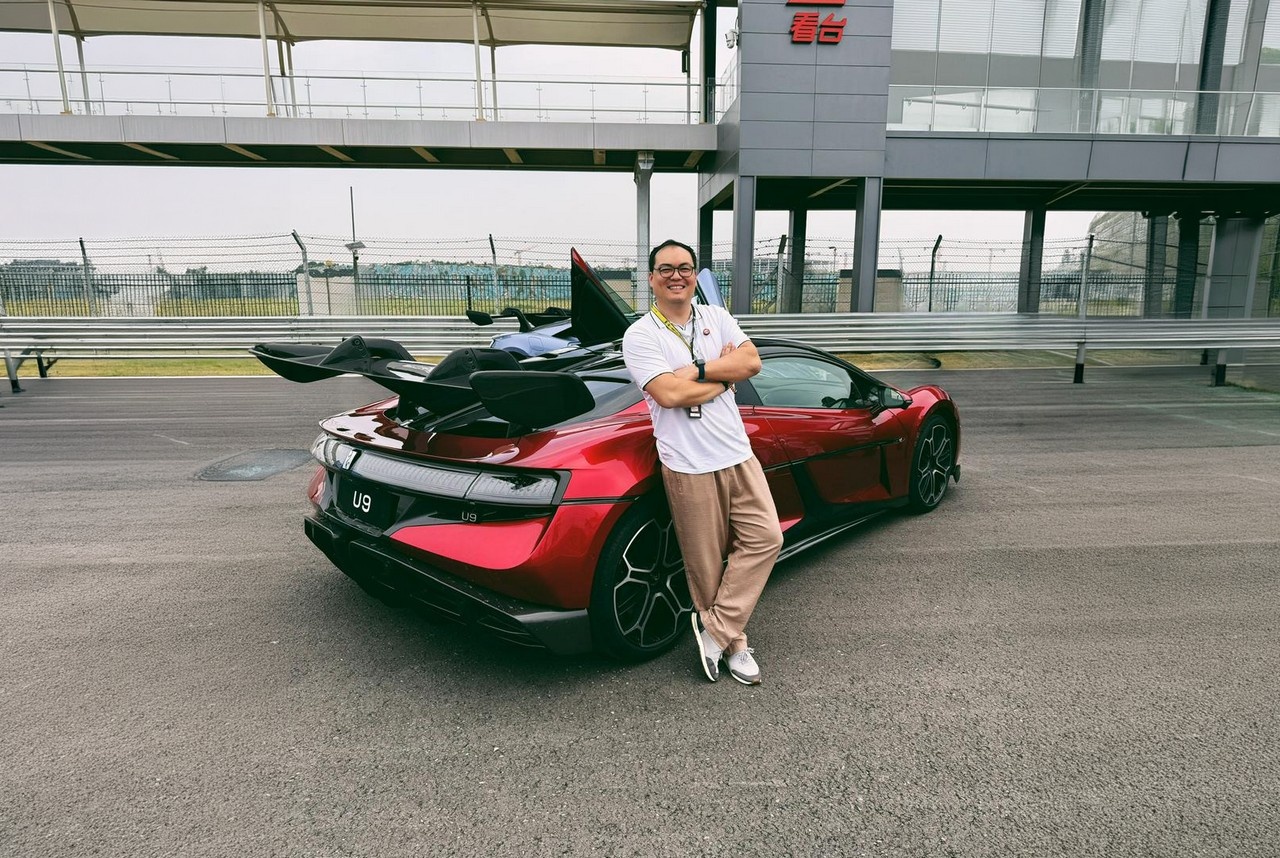
Rustam Maksutov, media manager and entrepreneur, on a media tour in Zhengzhou
The global automotive industry is undergoing a tectonic shift, and its epicenter is China. The trip to BYD’s E-Journey presentation showed how engineering ingenuity and automation are changing perceptions of mobility. The program consisted of three stages: immersion in the brand’s DNA and future technologies, vehicle testing on tracks, and exposure to the country’s cultural heritage.
Day 1. Science, Patents, and Total Automation in Zhengzhou
The introduction to the ecosystem began with a visit to BYD Di Space—the world’s first science and exhibition center for new energy vehicles (NEVs), covering 15,000 m². The floor’s exhibit flips the historical narrative on its head, reminding visitors that the first electric car was built 40 years before the internal combustion engine automobile. The strategy behind the shift to electric traction becomes clear through the “three 70s” concept: more than 70% of China’s oil is imported, 70% of those imports pass through the Strait of Malacca, and about 70% of oil is consumed by automobiles. BYD’s decision to end production of vehicles with traditional ICEs starting in 2022 is not merely an environmental manifesto but a pragmatic step toward a sustainable future.
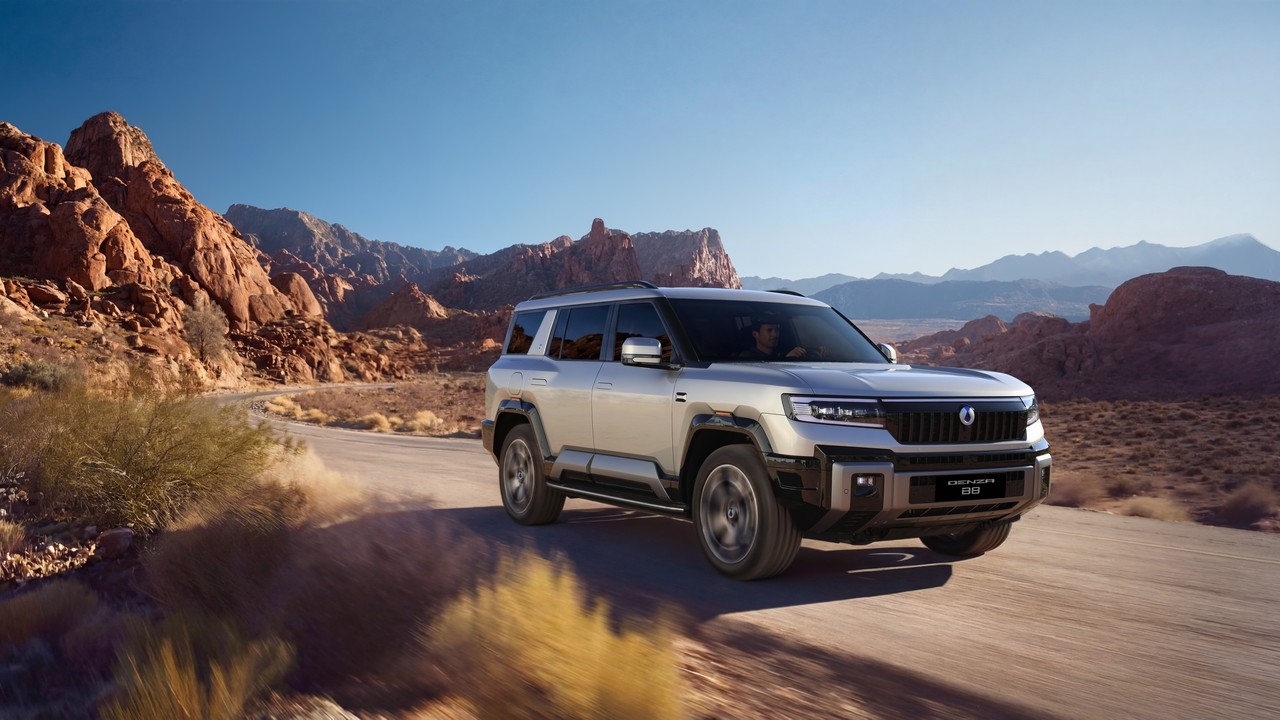
At Di Space, we were shown the brand’s architectural platforms, including BYD Dual Mode (DM) hybrid technologies: the fuel-efficient DM-i, the performance-oriented DM-p, and the world’s first dedicated off-road platform, the DMO Super Hybrid Off-road Platform. Safety is a priority for the engineers: displays featured the new-generation Blade Battery 2.0. They are thin, efficient, and resistant to nail-penetration and crush testing. Impressive were the wall of patents registered by the company, scale models of production complexes, DiLink smart cockpits, and the scent room where interior materials are tested for comfort.
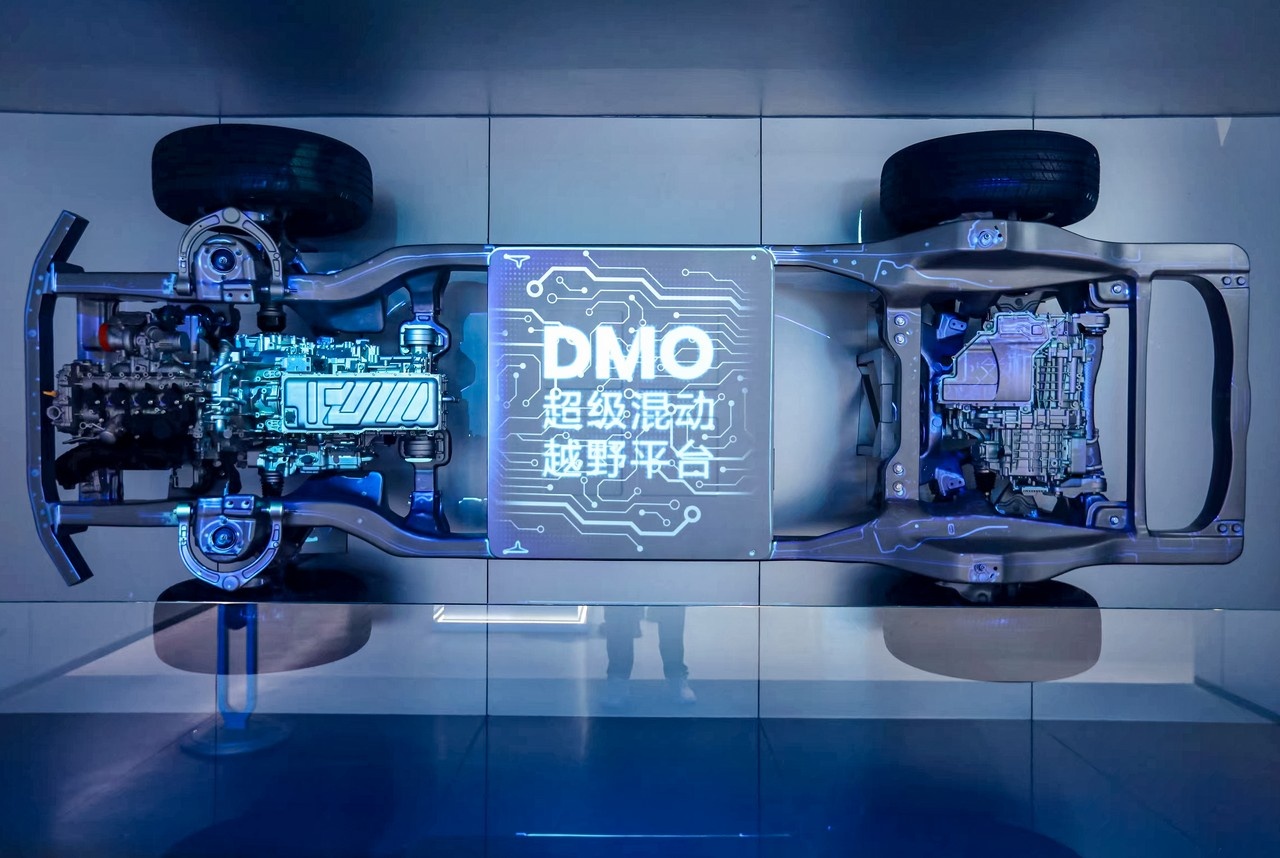
DMO hybrid system for Denza B5 and B8 SUVs
BYD’s plant is the corporation’s largest manufacturing base in Central China. The plant operates on a vertically integrated model, producing vehicles, automotive components, and traction batteries within a single ecosystem. One vehicle rolls off the line roughly every minute, and a new battery every three seconds. All key processes are automated — from laser welding to smart logistics, where parts are delivered to workstations by automated overhead conveyors.
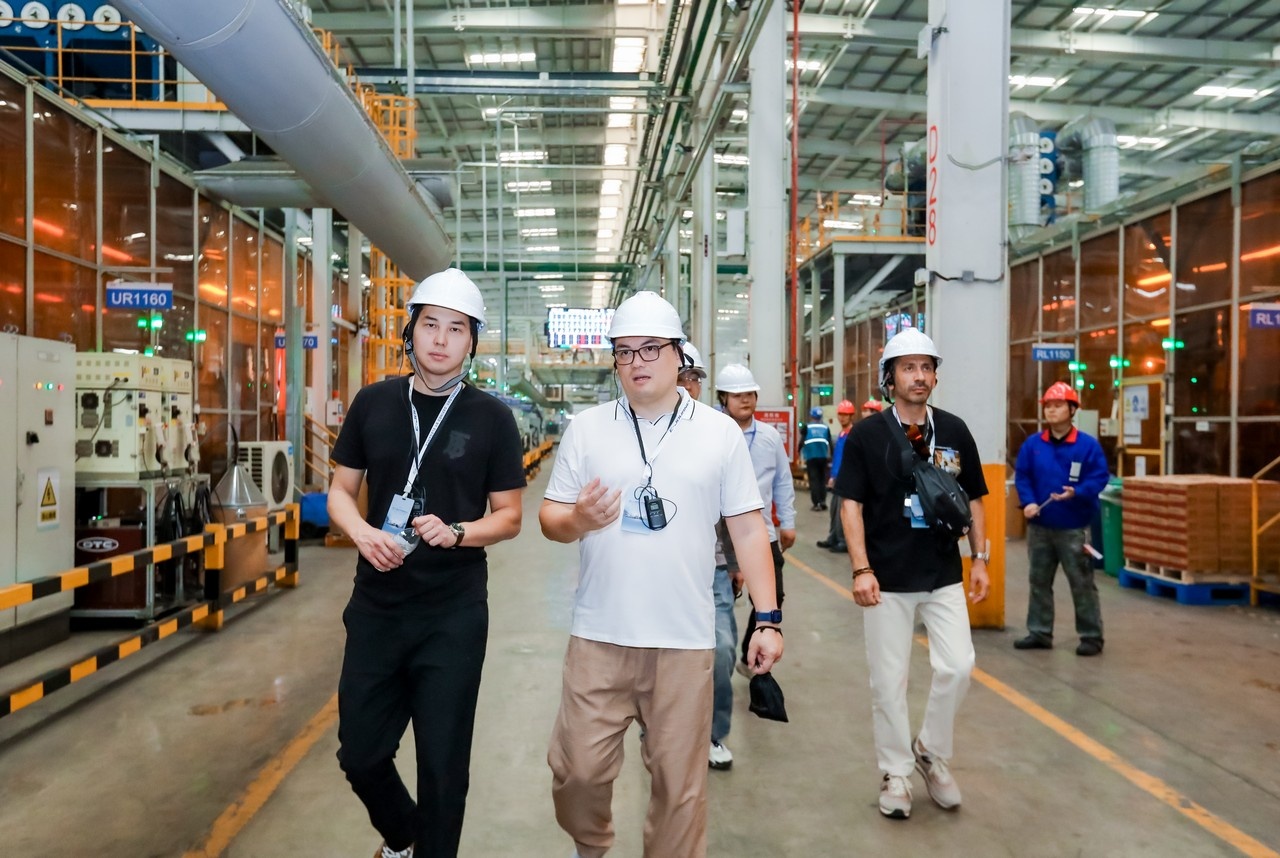
Zhengzhou, China. BYD Factory
Day 2. Extreme Test Drive and Charging Revolution
The second day began with a demonstration of the premium hybrid hatchback Denza Z9GT. Instructors demonstrated the intelligent control platform: they slowly and under full control guided the car through a controlled slide, showcasing the precision of the electronics, then kicked the car into a power drift on dry asphalt.
Next, the full-size Denza N9 crossover took the stage. It moved in crab mode thanks to independent wheel control. With its rear-axle steering system, the Denza N9’s wheels turn the rear of the vehicle so that the crossover literally screws itself into a parking space without leaving any part protruding into the traffic lane.
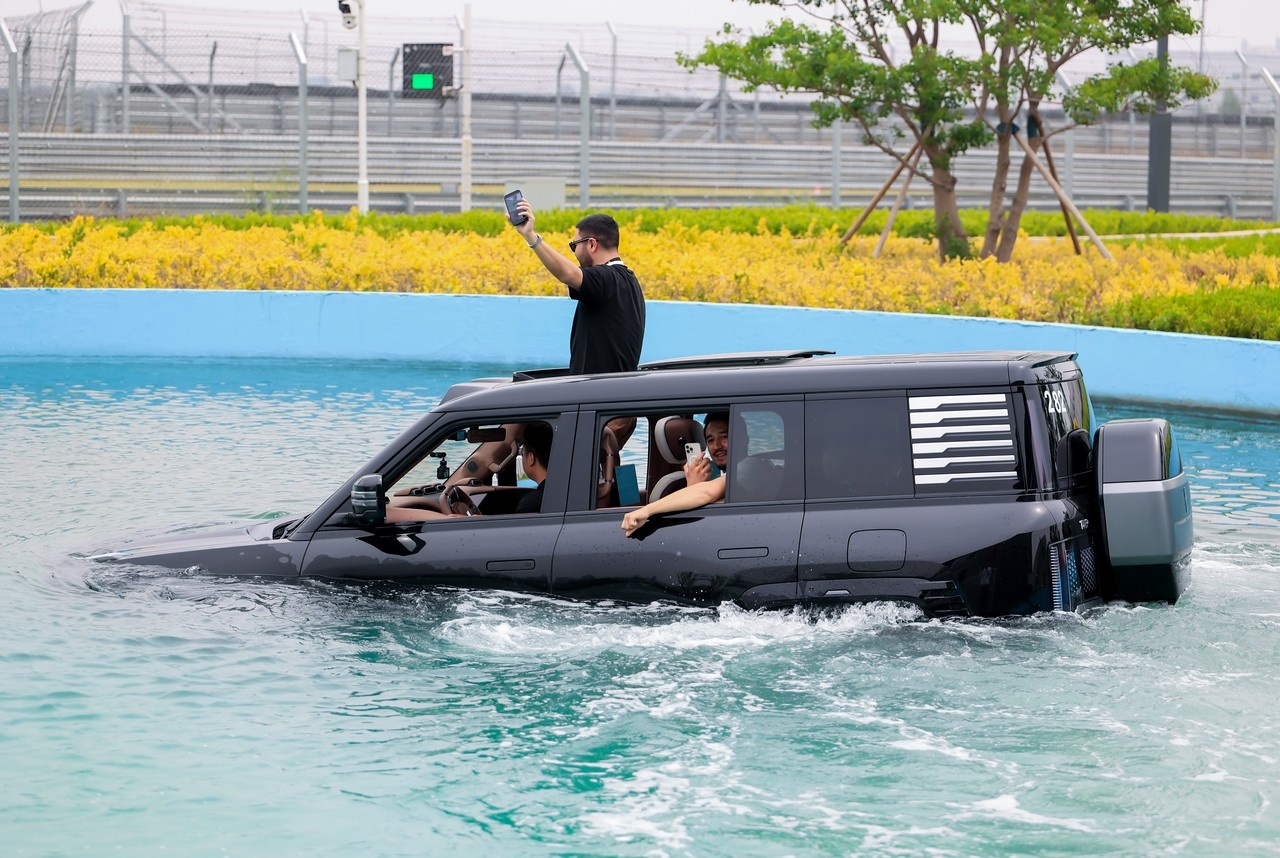
Demonstration of Yangwang U8 body sealing and water crossing capabilities
The real show was the Yangwang U8. We saw how, thanks to its sealed body and independent motors, the SUV can stay afloat and swim in a pool, then conquer a steep sand hill without wheelspin or preparation.
After the demonstration, we got behind the wheel of the new BYD Atto 8, BYD Ti7, Denza B5, and Denza B8. By the way, the Atto 8 has already entered the Kazakhstani market and is available at dealers. The other models are expected in the country. On the wet track, we also tested the Denza Z9GT’s smoothness in holding its line during a drift, and the day’s climax was laps on the race track behind the wheel of the electric Yangwang U9. Its extreme Xtreme version set a world speed record of 496.22 km/h at Germany’s ATP Automotive Testing Papenburg in 2025. We were offered the road-going versions, and they impressed with instant throttle response, the power of four electric motors, and how monolithically the car held its line through challenging hairpins.
We tested the Leopard off-road lineup, which will be sold in Kazakhstan under the Denza brand (B5 and B8), as well as the Yangwang U8, on an off-road course. The vehicles impressed with their off-road capability, approach and departure angles, and how easily electric motor torque lets them overcome diagonal wheel lift and deep ditches.
That same day, we were shown next-generation charging infrastructure in action. Thanks to the new Flash Charge station and the Blade Battery 2.0 architecture, the vehicle recharged to 97% in less than 9 minutes. This is proof that BYD’s solutions are erasing the infrastructure barrier between EVs and conventional ICE vehicles.
The trip will be remembered for the strong impressions made by the achievements of BYD’s engineers.
Today it is a technology giant leading in both science and vehicle sales. BYD’s example — with the scale of its factory automation, the speed at which it develops new solid-state and lithium battery solutions, and the expansion of its smart platforms — shows that the Chinese auto industry is no longer copying others’ technology. It is developing and implementing its own engineering solutions, and the world is left to catch up.
The Kazakhstani market — open to new ideas, flexible, and gaining momentum in adopting technology through automotive production — is on the threshold of a technological renewal. It was recently announced that Astana Motors is preparing to launch BYD vehicle production. According to the company’s plan, this historic moment for Kazakhstan is expected in 2027. Given that BYD has led global NEV sales for several years, localizing production of these vehicles will significantly advance the country in the automotive manufacturing sector. One hopes our generation will live to see the day when Kazakh engineers participate in developing the automotive technologies of the future and make their own discoveries for humanity.
Source: Forbes.kz
18/08/2026